allied tanks in normandy 1944 steven j zaloga

Allied Tanks in Normandy 1944 - Steven J. Zaloga
A concisely detailed guide to the Allied tanks that fought from D-Day to the break out from Normandy, their qualities, numbers and performance, and how they were used on the battlefield.When Allied tanks began to roll off the landing craft on D-Day, it marked the start of one of the great periods of tank warfare in World War II. Often outgunned by the German Panzers, and fighting in the close confines of bocage country, they nevertheless managed to break out of Normandy and begin the liberation of Europe. It was a battle that was dominated by the Americans'' legendary Sherman, but also saw a wide and complex range of armour committed to battle across the many armies involved, from British Churchills and special-purpose ''Funnies'' to the Canadians'' Ram tank.This book explains the qualities, strengths and weakness of the major British and US tank types as well as associated Allied units in Normandy including those of the Canadians, Poles and French, and describes how they really fought. It discusses the organization and equipment of the units, providing thumbnail sketches as well as statistical data on the types and categories of AFVs that saw action. This is a handy and concise guide ... Unknown localization key: "more"
Objev podobné jako Allied Tanks in Normandy 1944 - Steven J. Zaloga
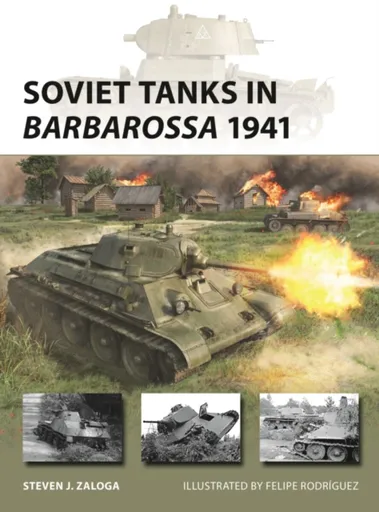
Soviet Tanks in Barbarossa 1941 - Steven J. Zaloga
The invasion of the Soviet Union saw the Red Army’s vast tank fleets crushed by the outnumbered Germans. Fully illustrated and packed with data, this book explains how and why.Contrary to popular belief, the largest tank battles of World War II were not during the Kursk campaign of 1943, but during Operation Barbarossa in the summer of 1941. The Soviet tank fleet was enormous – about 24,000 tanks facing about 3,500 Panzers. But despite the gross numerical imbalance in their favor, the summer 1941 campaign was a disaster for the Red Army. In this book, based on documents previously unpublished in the English language, world-renowned armor expert Steven J. Zaloga analyses why the Red Army performed so badly in Barbarossa. During the summer months, the Red Army lost about 15,000 tanks including most of its best new tanks such as the T-34s and KVs, and by winter, most of the pre-war arsenal had been lost. It was dubbed the “Tankoviy pogromâ€: the Tank Massacre. Illustrated with archive photos and meticulously detailed original illustrations, it examines the organization and doctrine of the Red Army in 1941 as well as the principal tank types, including information and illustrations on unusual and little-known ... Unknown localization key: "more"
Objev podobné jako Soviet Tanks in Barbarossa 1941 - Steven J. Zaloga
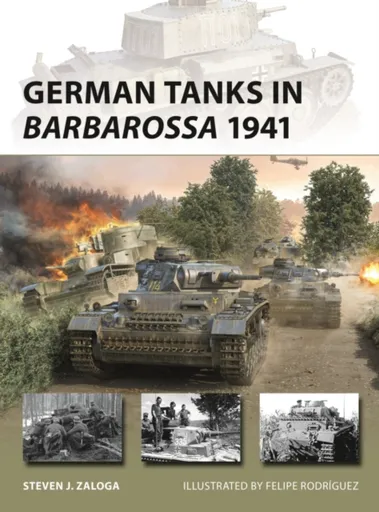
German Tanks in Barbarossa 1941 - Steven J. Zaloga
A detailed, illustrated study of Germany''s Panzer forces that invaded the Soviet Union, explaining how and why they performed as they did.Operation Barbarossa, Nazi Germany''s huge and fateful invasion of the Soviet Union, was the culmination of nearly two years of European conquests. By the time of Barbarossa, Germany''s Panzer forces had honed their Blitzkrieg methods of fast-moving warfare, but fighting across the wide expanses of eastern Europe would present them with their greatest challenge yet. While the Germans overran the Red Army at the start of the campaign, Barbarossa would end in failure.Written by one of the world''s experts on armoured warfare, and presenting newly uncovered data on the forces involved, this book explains the doctrine, organization, and technical capabilities of the Panzer forces, with a short overview on the armour of other Axis forces including Hungary, Romania, Slovakia, Finland, and Italy. The speed and shock value of the Panzer divisions was essential for the Wehrmacht to prevail over the Red Army in a brief campaign of annihilation. Packed with archive photos and superb original tank illustrations, this book explains how problems with the Panzers were a significant reason for the eventual failure of Barbarossa.
Objev podobné jako German Tanks in Barbarossa 1941 - Steven J. Zaloga
Podívejte se také
lustr Norman 14x18 cm
žralok Steven hračka
Pegasův most 6. června 1944
bag in box
Chardonnay bag in box
příčníky ROOF RACK IN 1 pro vozidla s hagusy
škrabadlo pro kočky INGA béžové
exkluzivní hodiny Made in Italy
certifikované ručníky OEKO-TEX MADE IN GREEN
povlečení s certifikátem MADE IN GREEN
certifikovaná osuška OEKO-TEX MADE IN GREEN
zmrzlinovač s funkcí Re-spin a Mix-In
WC kování s fixačním systémem FIX IN
povlečení s certifikátem OEKO-TEX MADE IN GREEN
designové hodiny Made in Italy
povlečení Glow in the Dark pro fanoušky
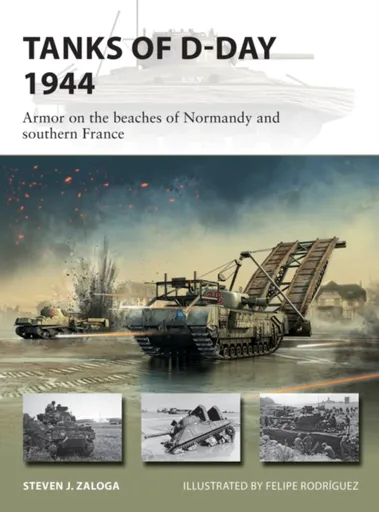
Tanks of D-Day 1944 - Steven J. Zaloga
Allied success in invading Fortress Europe (the area of Continental Europe occupied by Nazi Germany) depended on getting armor onto the beaches as fast as possible. This book explains how the Allies developed the specialist tanks it needed, their qualities, deployment and numbers, and how they performed on the two crucial days when France was invaded, firstly in Normandy and then in Provence. The focus of this volume will be on the specialized tanks developed for the Operation Neptune amphibious landings including the Duplex Drive amphibious Sherman tanks used on both the US and British/Canadian beaches. It also covers the specialized engineer tanks called â€Armoured Funnies†of the British 79th Armoured Division and addresses the popular myth that US Army refusal to employ the Armoured Funnies was a principal cause for the high casualties at Omaha Beach. There is also coverage of Operation Overlord’s “Forgotten D-Dayâ€, the amphibious landings of Operation Dragoon. This book addresses why there were so few Panzers opposing the landings from the German perspective as well as detailing the extent of German tank/assault gun activity on D-Day.
Objev podobné jako Tanks of D-Day 1944 - Steven J. Zaloga
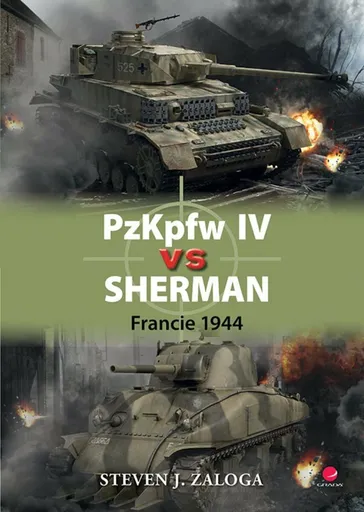
PzKpfw IV vs Sherman - Francie 1944 - Steven J. Zaloga
Když Spojenci v roce 1944 zahájili pokus o průlom v Normandii, záhy bylo jasné, že nad Němci nebude snadné zvítězit a že každý kousek území na cestě do Berlína obsadí až po těžkých bojích. Tato knížka se zaměřuje na urputné bitvy mezi německým tankem PzKpfw IV a americkým M4 Sherman, k nimž došlo v samém středu rozhodující fáze II. světové války.Oba tyto typy patřily mezi nejvíce vyráběné tanky na německé resp. americké straně a byly tradičními protivníky, kteří se opakovaně střetávali ve středomořském prostoru. Po celou dobu jejich dlouhé služby vznikla u obou tanků řada technických zdokonalení a modifikací. Došlo i k posunu v jejich původním určení - nicméně oba zůstaly na západní frontě v předních liniích.Autor knihy, odborník na tankovou techniku, vybízí čtenáře k detailní prohlídce stísněných prostor těchto obrněných dříčů a současně nabízí barvitý popis s pomocí technických kreseb spolu se sérií dobových i soudobých fotografií, které věrně zachytily podmínky života osádek.
Objev podobné jako PzKpfw IV vs Sherman - Francie 1944 - Steven J. Zaloga
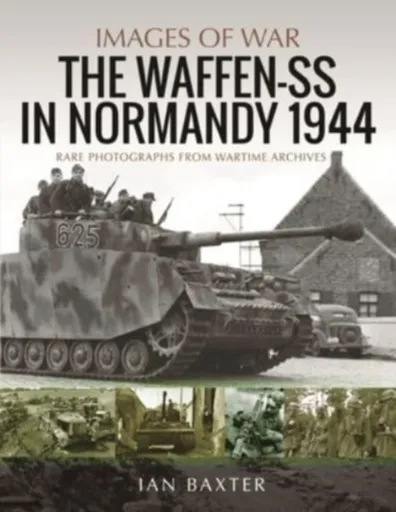
Waffen-SS in Normandy, 1944 - Ian Baxter
Superb well-captioned images show SS troops and their equipment in action.
Objev podobné jako Waffen-SS in Normandy, 1944 - Ian Baxter
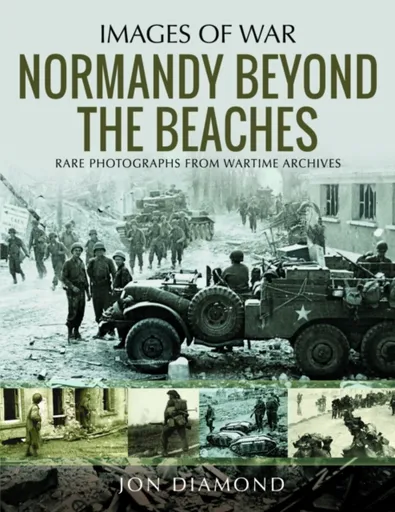
Normandy Beyond The Beaches - Jon Diamond
This latest Images of War series book examines the controversial development of the Allied campaign in Normandy in the weeks after the D-Day landings. After overcoming Rommel’s beach obstacles and ‘Atlantic Wall’ fortifications, a secure Allied lodgment of the five beaches developed along the Caen-Bayeux-Carentan axis with a period of consolidation while reinforcements and supplies were built up. The early arrival of 12th SS Hitlerjugend, 21st Panzer and the Panzer Lehr Divisions delayed Montgomery’s Anglo-Canadian capture of Caen until mid-July and prevented an early breakout into the countryside inland from Gold, Juno and Sword which was suitable for armoured combat. An early American goal was to cut the Cotentin Peninsula in two at its southern base to prevent the Germans from supplying and strengthening the deep-water port of Cherbourg, which U.S. VII Corps captured on 26 June. Inland from Omaha and Utah, the close ‘bocage’ country proved advantageous to the German defenders. The Allied breakout occurred at the end of July with Bradley’s Operation COBRA near St. Lo followed by the entire Allied front first moving to close the Falaise Gap before heading southward and then pivoting to the east for the capture of the Seine River crossings. These crucial ... Unknown localization key: "more"
Objev podobné jako Normandy Beyond The Beaches - Jon Diamond
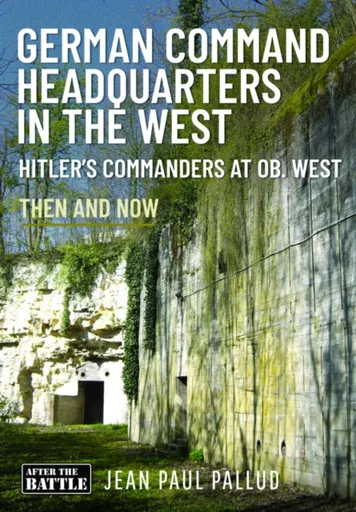
German Command Headquarters in the West - Jean Paul Pallud
The Wehrmacht won a quick victory in the West in 1940, the Netherlands and Belgium capitulated in May, and France signed an armistice on June 22. Heeresgruppe A remained in France and Generalfeldmarschall Gerd von Rundstedt and his staff established themselves at Saint-Germain-en-Laye and they soon worked on drawing up provisional instructions for Operation 'Seelöwe', the invasion of Great Britain. In October, von Rundstedt was appointed Commander-in-Chief West (Oberbefehlshaber West or Ob. West for short) and made responsible for all the German-occupied territory in western Europe. In April 1941, he and his staff were secretly moved to the East to take command of the right wing of the offensive against Russia and the function of Ob. West was taken over by Generalfeldmarschall Erwin von Witzleben. In March 1942 von Witzleben took leave of his command due to ill health and from the 8th, von Rundstedt returned as Commander-in-Chief in the West. It was from Saint-Germain that the Ob. West, von Rundstedt, faced the Allied landing in Normandy in June 1944, the invasion as the Germans called it. The German forces were unable to stop the Allied operation, Hitler found fault with the local commanders and decided to relieve von Rundstedt ... Unknown localization key: "more"
Objev podobné jako German Command Headquarters in the West - Jean Paul Pallud
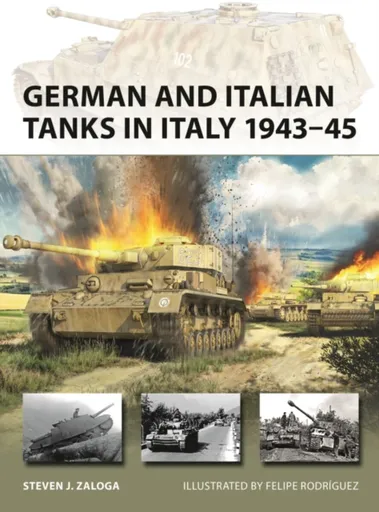
German and Italian Tanks in Italy 1943–45 - Steven J. Zaloga
An expert guide to the tanks that fought for the Axis in the Italian Campaign between 1943 and 1945, the least-known armoured campaign of World War II.World War II came to Italian soil in 1943 with the landings in Sicily, which the Wehrmacht tried to crush using substantial Panzer offensives. Over the next two years the Allies fought their way north, through some of the most difficult terrain of the war, until the final battles in the Po Valley in the spring of 1945. In this book, world armour expert Steven J. Zaloga offers a unique survey of Axis armour in the campaign, including the many types of tanks used, their roles and battlefield performance. The Italians deployed a variety of tanks on Sicily in 1943 including war-booty Renault R 35 tanks as well as their best tank destroyer, the Semovente 90/53, while a little-known rump Italian fascist army remained in combat until 1945, equipped in some cases with German tanks. Meanwhile Germany began its campaign equipped with leftovers from North Africa, but later deployed a much more substantial Panzer force. After the armistice Italy''s industries continued to manufacture tanks for the Wehrmacht, giving it an exotic selection of both ... Unknown localization key: "more"
Objev podobné jako German and Italian Tanks in Italy 1943–45 - Steven J. Zaloga
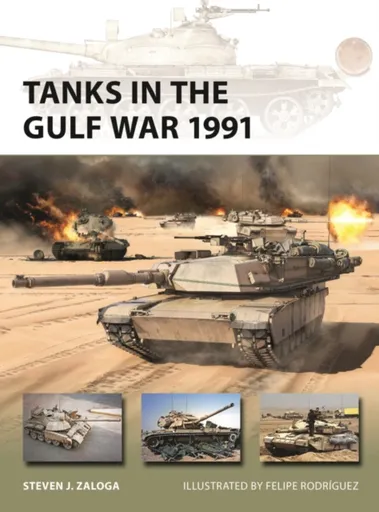
Tanks in the Gulf War 1991 - Steven J. Zaloga
An essential guide to the tanks that fought the greatest armored clashes of modern times, between Saddam Hussein''s Soviet-supplied army and the advanced tanks fielded by the Coalition.The Gulf War of 1991 was the largest tank-vs-tank confrontation of the modern era, and the only large-scale tank combat ever to involve major NATO armies. With the Iraqi Army equipped primarily with modern Soviet- and Warsaw Pact-built tanks, it was also a rare example of how NATO tanks performed in combat against their Eastern Bloc rivals.In this book, world expert on tank technology Steven J. Zaloga examines the numerous tank types used in this conflict and how they compared, both in technology and battlefield performance. Besides covering the tanks of the United States, Britain, and France, it also examines those of other Allied forces including Saudi Arabia and Kuwait. It not only covers Iraq''s Soviet- and Warsaw Pact-built tanks, but also its vigorous indigenous military industry, which produced a number of notable innovations such as the “Enigma†tank with laminate armor. Unravelling the detail behind the greatest tank war of modern times, packed with data and illustrated with superb new artwork and numerous photos, including some never-before-published, and detailed descriptions of the ... Unknown localization key: "more"
Objev podobné jako Tanks in the Gulf War 1991 - Steven J. Zaloga
Tanks in the Philippines 1944–45 - Steven J. Zaloga
The first book to examine the Japanese and American tank forces in the Philippines campaigns, which saw the biggest armored clashes of the Pacific War. The Philippines saw the most extensive tank combat of any single theater in the Pacific War. In this book, armor expert Steven J. Zaloga explains the capabilities of the tank forces involved and how they fought. He explains how while the first tank clashes on Leyte were relatively small scale, the fighting for Luzon, including the capital Manila, saw massive use of tanks by Pacific standards, and indeed, Luzon was the only place where a Japanese armored division was thrown into combat against US forces. While there was some tank-vs-tank combat in northern Luzon when the Japanese 2nd Tank Division faced separate US Army tank battalions, most tank fighting in the Philippines involved their use in the traditional infantry support role, including in the largest urban battle of the Pacific War, the horrific struggle for Manila. Packed with rare archive photos and detailed original illustrations of the tanks, this book offers a concisely detailed account of the neglected role of armor in the recapture of the Philippines.
Objev podobné jako Tanks in the Philippines 1944–45 - Steven J. Zaloga
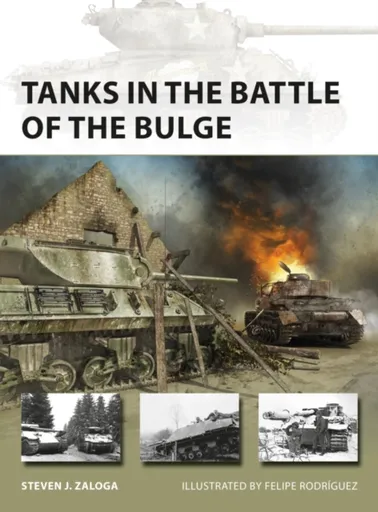
Tanks in the Battle of the Bulge - Steven J. Zaloga
The Battle of the Bulge raises many questions which, until now, have not been adequately answered: How did the major tank types perform during the battle? What were the specific ‘lessons learned’ from the combat? And did these lessons result in changes to tanks in the subsequent months? Offering detailed answers to these questions, and many more, this book provides a survey of the principal tank and tank-equivalents (such as tank destroyers and Jagdpanzers) that took part in the Ardennes Campaign of December 1944–January 1945. Beginning with a basic overview of the campaign, accompanied by an order of battle of the major armoured units, it examines the opposing forces, covering the organization of the two tank forces to explain how they were deployed. Author Steven Zaloga also scrutinises the technical balance between the opposing sides, comparing armour, mobility and firepower as well as other important factors such as reliability, crew situational awareness, and tank layout/efficiency. Full of specially commissioned and highly accurate artwork plates of the tanks themselves, as well as fascinating technical data based on cutting-edge research, this title is the definitive guide to tank warfare in the Battle of the Bulge.
Objev podobné jako Tanks in the Battle of the Bulge - Steven J. Zaloga
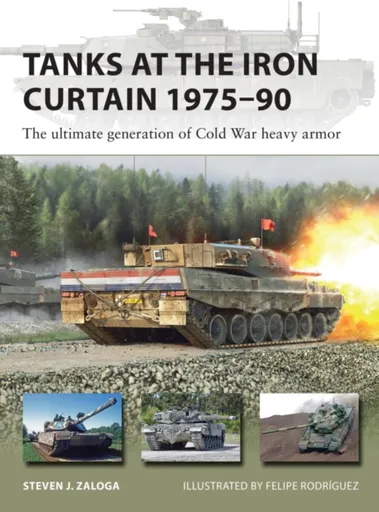
Tanks at the Iron Curtain 1975–90 - Steven J. Zaloga
A comprehensive, illustrated account of the new generation of advanced tanks to emerge during the last 15 years of the Cold War, showcasing major improvements in armor protection, gunsights, and fire-control systems.Focusing on the technology of the period, author Steven J. Zaloga explains how the demands of a potential Cold War battlefield spurred the development of the 20th century’s most advanced tanks. He considers the final versions of the Soviet T-72, T-64, and T-80 and assesses their strengths and weaknesses. He also explores how the failure of the US-German MBT-70 project led to America’s development of the M1 Abrams tank, and to Germany’s all-new Leopard II. The British development of the Challenger tank is also considered, as is the lesser-known Leclerc tank developed by France, the smallest and lightest of any of the western designs.Featuring superbly detailed new illustrations and many photos, this volume pinpoints the key technology of the era, including turbine engines, APFSDS ammunition, advanced armor and high-tech fire-control systems, and describes how the rival tanks compared in the final stretch of the Cold War arms race.
Objev podobné jako Tanks at the Iron Curtain 1975–90 - Steven J. Zaloga
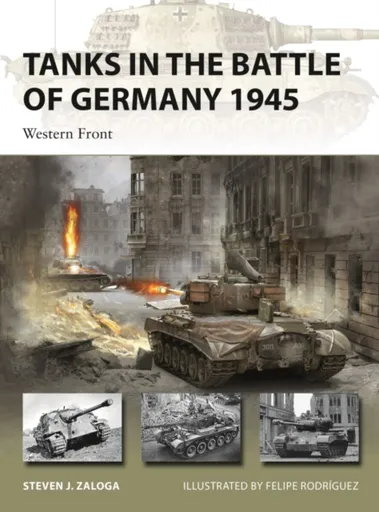
Tanks in the Battle of Germany 1945 - Steven J. Zaloga
The crossing of the river Rhine marked the beginning of the end of the Third Reich, but the Wehrmacht would fight ferociously on its home soil until the fall of Berlin. The Battle of Germany saw the most advanced tanks of the Allies pitted against the remnants of the once-formidable Panzerwaffe, now exhausted and lacking many of the essentials of armored warfare, but equipped with the biggest and most powerful tanks they would ever field. In these last months the Allies were now equipped with the most advanced Shermans such as the M4A3E8, as well as some of the types that would go on to have successful postwar careers such as the Pershing, Comet, and Chaffee. In contrast the Panzer forces had pinned their hopes on small numbers of monstrous types such as the Jagdtiger and Tiger II, as well as the workhorse Sturmgeschütz and Panzer IVs and Vs. But with German forces crumbling, the Panzerwaffe lacked trained crews, replacement vehicles and fuel, while the Allies’ well-supported tank forces advanced through Germany in spectacular combined-arms fashion. Packed with information on tank numbers, types, and comparative performance, this book sheds new light on the two sides’ tanks, organization, and doctrine, and ... Unknown localization key: "more"
Objev podobné jako Tanks in the Battle of Germany 1945 - Steven J. Zaloga
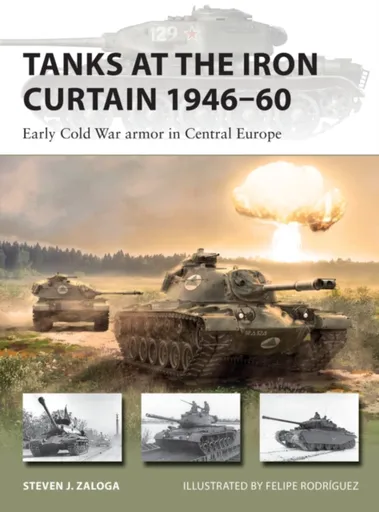
Tanks at the Iron Curtain 1946–60 - Steven J. Zaloga
A study of the Soviet and NATO armored forces that faced each other off in Central Europe in the early Cold War, and how their technology, tactics, and doctrine were all rapidly developed.For 45 years, the most disputed point in the World was the dividing line between East and West in Europe; here the use and development of tanks was key. In this fully illustrated study, author Steve Zaloga, describes how Soviet and NATO tanks were deployed in the early years of the Cold War, and how a generation of tanks such as the Soviet T-44/T-54 and IS-3, British Centurion, US Army M26/M46 Pershing (all developed during World War II) saw extensive service after the war had ended. Initial post-war generation tanks including the Soviet T-54A, T-10 heavy tank, British late-model Centurions, Conqueror, US Army M41, M47, M48 and the French AMX-13 are examined in detail alongside the most important technical trends of the era: the development of shaped-charge anti-tank projectiles, the influence of anti-tank missiles, and the introduction of chemical/nuclear protection and night fighting equipment. The book also considers the influence of post-war doctrine and tactics on tank technology and the effect of regional conflicts such as the 1950 ... Unknown localization key: "more"
Objev podobné jako Tanks at the Iron Curtain 1946–60 - Steven J. Zaloga
British Battle Tanks - Steven J. Zaloga, David Fletcher
This lavishly illustrated volume details the design, development and operational history of US-made tanks in British service in the Second World War.The idea of British soldiers using American tanks was not viewed with a great deal of enthusiasm by the British Army. They perceived American tanks as being crudely made, mechanically unsophisticated and impossible to fight in. However, once British crews got used to them and learned to cope with some of their difficulties, such as limited fuel capacity and unfamiliar fighting techniques, they started to see them in a far more positive light, in particular their innate reliability and simplicity of maintenance. This book, the last in a three-part series on British Battle Tanks by armour expert David Fletcher, concentrates on World War II and studies American tanks in British service, some of which were modified in ways peculiar to the British. It shows how the number of these tanks increased to the point that they virtually dominated, as well describing some types, such as the T14 and M26 Pershing, which were supplied but never used in British service.
Objev podobné jako British Battle Tanks - Steven J. Zaloga, David Fletcher
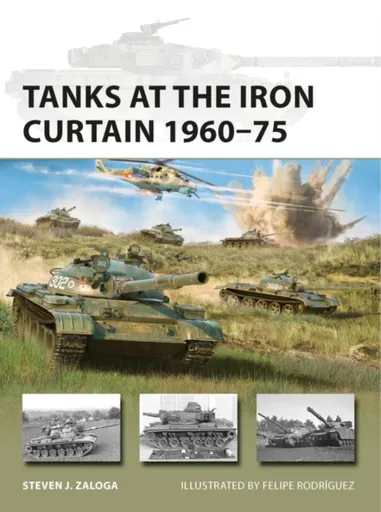
Tanks at the Iron Curtain 1960–75 - Steven J. Zaloga
A new analysis of the technology and tanks that faced off against each other on opposite sides of the Iron Curtain, during the very height of the Cold War.From the 1960s onwards, there was a generational shift in tank design and warfare with the advent of CBR (chemical, biological, radiological) protection and a move away from HEAT ammunition to APFSDS. This shift confronted the growing threat of guided anti-tank missiles and saw the introduction of composite armor. Soviet heavy tanks and tank destroyer/assault guns became obsolete, giving way to the technological might of the T-62 and T-64, while NATO forces employed the Chieftain, AMX-30, Leopard I, and M60, plus the initial attempt at a common US-German tank, the MBT-70. Using detailed illustrations and contemporary photographs, this companion volume to NVG 301, Tanks at the Iron Curtain 1946–60 focuses on key battle tanks and their technology to give a comprehensive overall picture of how tanks developed during modern times.
Objev podobné jako Tanks at the Iron Curtain 1960–75 - Steven J. Zaloga
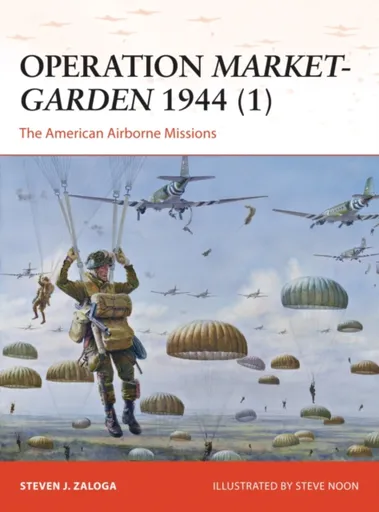
Operation Market-Garden 1944 (1) - Steven J. Zaloga
Overshadowed by the dramatic British failure at Arnhem, the US 82nd and 101st Airborne Divisions were a vital component of Operation Market-Garden and succeeded in capturing their objectives at Eindhoven and Nijmegen.In the summer of 1944, plans began for a complex operation to seize a Rhine river bridge at Arnhem in the Netherlands. The American portion of the airborne mission was to employ two divisions of the US XVIII Airborne Corps to seize key terrain features that otherwise might delay the advance of British tanks towards the bridge.The 82nd and 101st Airborne Divisions succeeded in their tasks of capturing the vital bridges at Eindhoven at Nijmegen in the face of fierce German resistance. However, the delays caused to the British armored advance, combined with stronger than expected fighting at Arnhem led to the withdrawal of the remnants of the British 1st Airborne Division in one of the Western Allies’ most costly defeats of World War II.Contemporary photographs, maps and detailed color artwork complement extensive archival research that reveals the successes of those American airborne missions, largely overshadowed by the failure of the operation as a whole.
Objev podobné jako Operation Market-Garden 1944 (1) - Steven J. Zaloga
Allied Tanks at El Alamein 1942 - William E. Hiestand
Examines Eighth Army''s 1,000-strong tank force – rebuilt, reorganized, and equipped with brand-new Sherman and Churchill tanks – that secured victory at the Second Battle of El Alamein.When Eighth Army retired into the defensive line at El Alamein on 30 June 1942, it was tired, dispirited and had lost almost all its tanks during a string of defeats at Gazala, Tobruk and Mersa Matruh. After savage defensive fighting at First Alamein, the reinforced Desert Rats defeated Rommel’s last offensive in a tank-to-tank clash at Alam Halfa in September. The next month, a completely rebuilt and reorganized Eighth Army, equipped with over 1,000 tanks including the American M4 Sherman, launched the offensive that would finally drive Rommel out of Africa.Montgomery shaped the Eighth Army according to his own military ideas, and on 23 October was able to attack the Axis defenses with the largest force of armoured divisions in its history, with the 1st, 8th and 10th united in a new ''corps de chasse'' intended to defeat the Afrika Korps at its own game, and the 7th and two infantry support tank brigades assigned to support the XXX and XIII Corps. With the exception of the A9, 10 and 13 cruisers ... Unknown localization key: "more"
Objev podobné jako Allied Tanks at El Alamein 1942 - William E. Hiestand
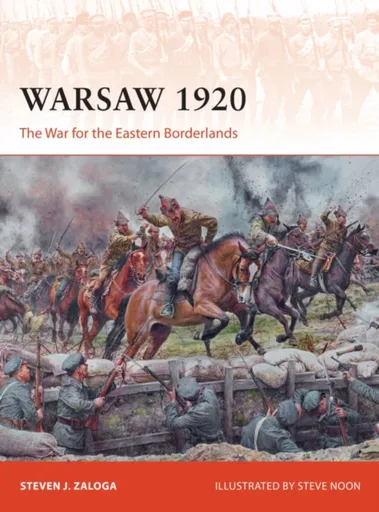
Warsaw 1920 - Steven J. Zaloga
Published to coincide with the centenary of the campaign, this highly illustrated book from Steven Zaloga explores a David and Goliath conflict which saw the survival of the newly independent Poland in the face of the Soviet Red Army.The Battle of Warsaw in August 1920 has been described as one of the decisive battles of European history. At the start of the battle, the Red Army appeared to be on the verge of advancing through Poland into Germany to expand the Soviet revolution. Had the war spread into Germany, another great European war would have ensued, dragging in France and Britain. However, the Red Army was defeated by ‘the miracle on the Vistula’. This campaign title explores the origins and outcomes of this momentous battle. In May 1920, the Polish Army intervened in war-torn Ukraine, pushing all the way to Kiev, but the Red Army, by now triumphant in most of the theatres of the Russian Civil War, turned its attention to this new threat. By the late summer of 1920, two Soviet armies had advanced into Poland and the overconfident Soviet leadership dreamed of advancing over a prostrate Polish Army into neighbouring Germany to ignite a Communist revolution in ... Unknown localization key: "more"
Objev podobné jako Warsaw 1920 - Steven J. Zaloga
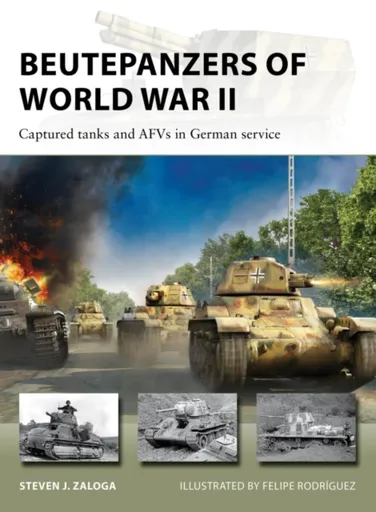
Beutepanzers of World War II - Steven J. Zaloga
Illustrated with original artwork and archive photos, this is the history of Germany''s extensive use of captured tanks in World War II.In this book Steven J. Zaloga, one of the world''s leading armor authorities, uncovers the history of one of the least-known aspects of Germany''s World War II Panzers: the extensive use of captured armored vehicles, “Beutepanzer.” The best came from the fall of France, and the Somua S 35 and Panhard 178 proved popular in German service. Others, such as the antique Renault FT, were used for secondary tasks such as anti-partisan missions and airfield protection. Most curious of all were the “Becker conversions,” a private venture of a German artillery officer with family industry, who mechanized his unit''s towed artillery and went on to oversee the modernization and upgunning of many French Beutepanzers. These would play a particularly important role in Normandy in 1944.Although the Wehrmacht captured large numbers of Soviet tanks, these saw very limited service, and most were sent to the smelters. When Italy switched sides in September 1943, the Italian AFV industry continued producing tanks and AFVs for the Wehrmacht, while tanks and AFVs captured from other Allied armies including Britain and the US were ... Unknown localization key: "more"
Objev podobné jako Beutepanzers of World War II - Steven J. Zaloga
Tanks in the Easter Offensive 1972 - William E. Hiestand
This study explains how the armies of North and South Vietnam, newly equipped with the most modern Soviet and US tanks and weaponry, fought the decisive armored battles of the Easter Offensive.Wearied by years of fighting against Viet Cong guerillas and North Vietnamese regulars, the United States had almost completely withdrawn its forces from Vietnam by early 1972. Determined to halt the expansion and improvement of South Vietnamese forces under the U.S. “Vietnamization†program, North Vietnam launched a major fourteen-division attack in March 1972 against the South that became known as the “Easter Offensive.†Hanoi’s assault was spearheaded by 1,200 tanks and was counteracted on the opposite side by Saigon’s newly equipped armored force using U.S. medium tanks. The result was ferocious fighting between major Cold War-era U.S. and Soviet tanks and mechanized equipment, pitting M-48 medium and M-41 light tanks against their T- 54 and PT-76 rivals in a variety of combat environments ranging from dense jungle to urban terrain. Both sides employed cutting-edge weaponry for the first time, including the U.S. TOW and Soviet 9M14 Malyutk wire-guided anti-tank missiles.This volume examines the tanks, armored forces and weapons that clashed in this little-known campaign in detail, using after-action reports ... Unknown localization key: "more"
Objev podobné jako Tanks in the Easter Offensive 1972 - William E. Hiestand
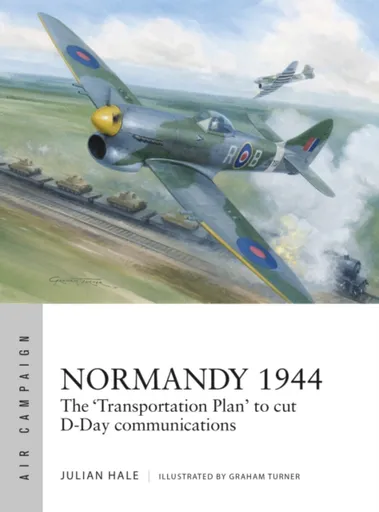
Normandy 1944 - Julian Hale
Packed with illustrations, this is the first book to focus on the ''Transportation Plan'', the air campaign to isolate the D-Day beaches from German reinforcements.As the invasion of Europe grew closer, thought was given to how to use the Allies'' substantial forces of heavy bombers in preparation. After much controversy, the plan eventually adopted was the ‘Transportation Plan’, in which the railway and road networks of France (and hence the German logistical chain) were targeted in order to slow German reinforcements to the Normandy beachhead both before and during the Allied invasion.In this book, aviation researcher Julian Hale draws on new archive research to explain how this crucial, dangerous and often spectacular campaign was fought. Running from April to July 1944, it would eventually involve heavy and medium bombers of both the RAF and USAAF, with a starring role for the fighter-bombers of the Ninth Air Force. Early attacks by strategic bombers on the French rail nodes were only partially successful at best. In mid-May, the decision was taken to attack bridges and road and rail traffic intensively using fighter-bombers, mainly drawn from the US Ninth. Illustrated with carefully chosen photos, spectacular battlescene artwork and explanatory maps and 3D diagrams, ... Unknown localization key: "more"
Objev podobné jako Normandy 1944 - Julian Hale
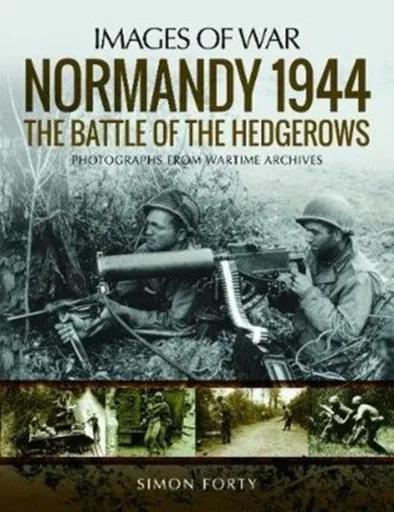
Normandy 1944: The Battle of the Hedgerows - Simon Forty
Photographic history of a key stage in 1944 Normandy campaign.
Objev podobné jako Normandy 1944: The Battle of the Hedgerows - Simon Forty
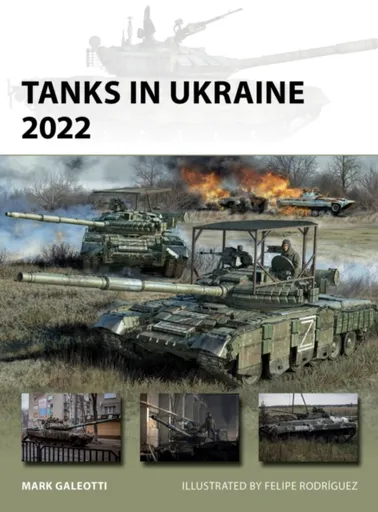
Tanks in Ukraine 2022 - Mark Galeotti
A world-renowned expert offers a focused, illustrated account of how Russian and Ukrainian armour fought during the crucial year of 2022, prior to the arrival of Western tanks. The invasion of Ukraine has seen full-scale mechanized warfare return to Europe. While Western armour and training has been a major part of Ukraine’s army since 2023, in the first year of the war both the Russian invaders and the Ukrainians fought using their existing mechanized armies, in the most devastating and high-stakes war in decades. That year, Moscow’s latest tanks (bar the still undeployable T-14 Armata) found themselves engaging Ukraine’s modernized and customized Soviet-era tank fleet. World-renowned Russia specialist Mark Galeotti draws on rare Russian and Ukrainian sources to present a definitive account of the Russian and Ukrainian tanks that fought that year, before the first Western tanks arrived. He explores the rival tank armies, how they were used, and the ways they were modified in response to the emerging challenges of the war, and presents the reader with ORBATs and data on deployments new to the English-speaking world. As the war in Ukraine revolutionizes our understanding of modern warfare, this book offers an expert assessment of how Ukrainian tanks fought ... Unknown localization key: "more"
Objev podobné jako Tanks in Ukraine 2022 - Mark Galeotti
Allied Tanks of the Second World War - Michael Green
Covers all Allied Tank variants of the WW2 period across all theatres.
Objev podobné jako Allied Tanks of the Second World War - Michael Green
Battle for the Bocage, Normandy 1944 - Tim Saunders
This is the story of the fighting in Normandy by the veteran desert formations brought back by Montgomery from the Mediterranean in order to spearhead the invasion; 50th Infantry and 7th Armoured divisions, plus 4th Armoured Brigade. Heavily reinforced by individuals and fresh units, their task beyond the beaches was to push south to Villers Bocage with armour on the evening of D Day in order to disrupt German counter-attacks on the beachhead.Difficulties on 50th Division’s beaches and lost opportunities allowed time for the 12th Hitlerjugend SS Panzer Division and the equally elite 130th Panzer Lehr Division to arrive in Normandy, despite delays of their own caused by allied fighter bombers. The result was 4th Armoured Brigade’s thrust south encountered opposition from the start and was firmly blocked just south of Point 103 after an advance of less than 5 miles.A major counter-attack by Panzer Lehr failed, as did a renewed British attempt, this time by the vaunted 7th Armoured Division, which was halted at Tilly sur Seulles. From here the fighting became a progressively attritional struggle in the hedgerows of the Bocage country south of Bayeux. More and more units were drawn into the fighting, which steadily extended west. ... Unknown localization key: "more"
Objev podobné jako Battle for the Bocage, Normandy 1944 - Tim Saunders
The Battle for Normandy, 1944 - James Holland
BOOK 9 OF THE LADYBIRD EXPERT HISTORY OF THE SECOND WORLD WAR, FROM AWARD-WINNING HISTORIAN JAMES HOLLANDFeaturing stunning illustrations from Keith Burns, bringing the story to life in vivid detailWhy did the Allies attack on D-Day?How did the Allies pick Normandy as a target?What was Operation Overload, the second front against the Nazis?JUNE 6 1944D-Day was a deciding conflict in World War II. But the invasion was not a straightforward attack.From feeding Nazi spies false information on the attack, to developing new technology like the Mulberry harbours, D-Day changed the course of the War for good.THE LARGEST SEABORNE INVASION IN HISTORYWritten by historian, author and broadcaster James Holland, The Battle for Normandy is an essential introduction to the naval invasion that began the liberation of Western Europe from the Nazis.__________Discover the full Ladybird Expert WW2 series:BlitzkriegThe Battle of BritainBattle of the AtlanticThe Desert WarThe Eastern FrontThe Pacific WarThe Bomber WarThe War in ItalyThe Battle for NormandyThe War in BurmaVictory in EuropeVictory Against Japan
Objev podobné jako The Battle for Normandy, 1944 - James Holland
Normandy 1944: The Battle for Caen - Simon Forty
Photographic history of the two-month battle for Caen in 1944 .
Objev podobné jako Normandy 1944: The Battle for Caen - Simon Forty

Spring Cannot be Cancelled: David Hockney in Normandy - David Hockney, Martin Gayford
David Hockney reflects upon life and art as he experiences lockdown in rural Normandy On turning eighty, David Hockney sought out rustic tranquillity for the first time: a place to watch the sunset and the change of the seasons; a place to keep the madness of the world at bay. So when Covid-19 and lockdown struck, it made little difference to life at La Grande Cour, the centuries-old Normandy farmhouse where Hockney set up a studio a year before, in time to paint the arrival of spring. In fact, he relished the enforced isolation as an opportunity for even greater devotion to his art. Spring Cannot be Cancelled is an uplifting manifesto that affirms art’s capacity to divert and inspire. It is based on a wealth of new conversations and correspondence between Hockney and the art critic Martin Gayford, his long-time friend and collaborator. Their exchanges are illustrated by a selection of Hockney’s new, unpublished Normandy iPad drawings and paintings alongside works by van Gogh, Monet, Bruegel, and others. We see how Hockney is propelled ever forward by his infectious enthusiasms and sense of wonder. A lifelong contrarian, he has been in the public eye for sixty years, yet remains ... Unknown localization key: "more"
Objev podobné jako Spring Cannot be Cancelled: David Hockney in Normandy - David Hockney, Martin Gayford
Gunners in Normandy - Lieutenant Colonel Will Townend, Major Frank Baldwin
The official account of the Royal Artillery’s activities in the Normandy campaign, this volume breaks down the historic achievements of the Regiment, integrating newly published research with a detailed account of their activities, logistics and equipment in the offensive.Gunners in Normandy includes mention of every regiment that served, a Roll of Honour, and a list of the dead by unit. This book presents the definitive record of events, assembled from interviews with veterans, papers and documents from the Firepower Archives, terrain studies, personal memoirs, war diaries and other official documents. Serious students of the battle for Normandy should find this essential reading, with comprehensive coverage of the role of the Royal Artillery, and much material not published anywhere else, including orders of battle, the details of targets engaged by the guns and their effectiveness.
Objev podobné jako Gunners in Normandy - Lieutenant Colonel Will Townend, Major Frank Baldwin
Soviet Tanks in Manchuria 1945 - William E. Hiestand
A new illustrated study of the devastating, but little-known, Soviet armored blitzkrieg against the Japanese in the last weeks of World War II, and how it influenced Soviet tank doctrine as the Cold War dawned.Although long overshadowed in the West by the dropping of the atomic bombs on Hiroshima and Nagasaki, the USSR’s lightning strike into Manchuria in August 1945 was one of the most successful and unique campaigns of the era. Soviet forces, led by over 5,500 tanks and self-propelled guns, attacked across huge distances and deserts, marshes, and mountains to smash Japan’s million-strong Kwantung Army in a matter of days.Japanese forces were short of training and equipment, but nevertheless fought fiercely, inflicting 32,000 casualties on the Soviets. Red Army operations were characterized by surprise, speed, and deep penetrations by tank-heavy forces born of the brutal lessons they had learned during years fighting the Wehrmacht. Lessons from the campaign directly shaped Soviet Cold War force structure and planning for mechanized operations against the West.Illustrated with contemporary artwork and rare photos from one of the best collections of Soviet military photos in the West, this fascinating book explains exactly how the last blitzkrieg of World War II was planned, fought, ... Unknown localization key: "more"
Objev podobné jako Soviet Tanks in Manchuria 1945 - William E. Hiestand
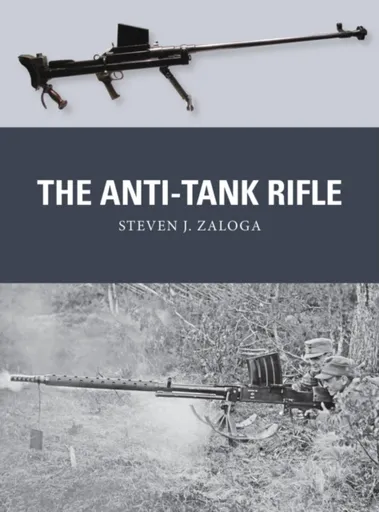
The Anti-Tank Rifle - Steven J. Zaloga
The emergence of the tank in World War I led to the development of the first infantry weapons to defend against tanks. Anti-tank rifles became commonplace in the inter-war years and in the early campaigns of World War II in Poland and the Battle of France, which saw renewed use in the form of the British .55in Boys anti-tank rifle - also used by the US Marine Corps in the Pacific. The French campaign made it clear that the day of the anti-tank rifle was ending due to the increasing thickness of tank armour.Nevertheless, anti-tank rifles continued to be used by the Soviets on the Eastern Front with two rifles, the 14.5mm PTRS and PTRD, and were still in widespread use in 1945. They served again with Korean and Chinese forces in the Korean War, and some have even appeared in Ukraine in 2014–15. Fully illustrated and drawing upon a range of sources, this is the absorbing story of the anti-tank rifle, the infantryman’s anti-armour weapon during the world wars.
Objev podobné jako The Anti-Tank Rifle - Steven J. Zaloga
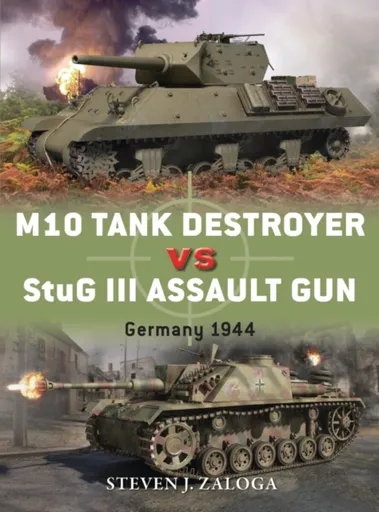
M10 Tank Destroyer vs StuG III Assault Gun - Steven J. Zaloga
A compact, detailed account of the clashes between the Allies’ M10 Tank Destroyer and the Germans’ Sturmgeschütz (StuG) lll, the unsung workhorses of the northwest European battlefields of 1944–45.While their mission was not principally fighting one another, their widespread use ensured their frequent encounters, from the Normandy Bocage, to the rubble-strewn streets of Aachen. The StuG lll was the quintessential assault gun, a low-slung, heavily armoured, turret-less vehicle intended to provide direct fire support for infantry formations, whilst the M10 3in Gun Motor Carriage was originally developed as a tank destroyer. However, by 1944 the 3in gun proved ineffectual against the most thickly armored German tanks, and was consequently relegated to infantry support too.Widely deployed in roles their designers had not envisaged, these two armoured fighting vehicles clashed repeatedly during the 11-month campaign, which saw the Allies advance from Normandy to the heart of the Reich. Fully illustrated with specially commissioned artwork, this is the story of their confrontation at the height of World War ll.
Objev podobné jako M10 Tank Destroyer vs StuG III Assault Gun - Steven J. Zaloga
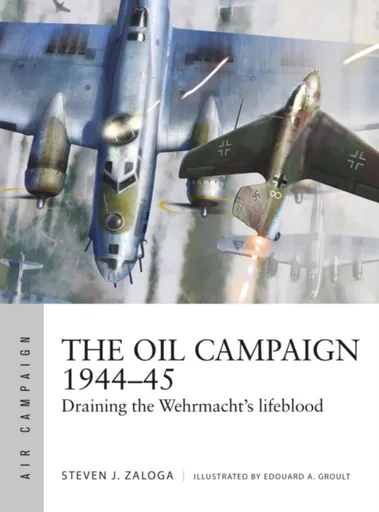
The Oil Campaign 1944–45 - Steven J. Zaloga
A new illustrated history of one of the key air campaigns of late World War II – the American effort to cripple Germany''s oil production, and grind its armed forces to a halt.With retreating German forces losing their oilfields on the Eastern Front, Germany was reliant on its own facilities, particularly for producing synthetic oil from coal. However, these were within range of the increasingly mighty Allied air forces. In 1944 the head of the US Strategic Air Forces, General Carl Spaatz was intent on a new campaign that aimed to cripple the German war machine by depriving it of fuel. The USAAF’s Oil Campaign built up momentum during the summer of 1944 and targeted these refineries and plants with its daylight heavy bombers. Decrypted German communications made it clear that the Oil Campaign was having an effect against the Wehrmacht. Fuel shortages in the autumn of 1944 forced the Luftwaffe to ground most of its combat units except for fighters involved in the defense of the Reich. Fuel shortages also forced the Kriegsmarine to place most of its warships in harbor except for the U-boats and greatly hampered German army campaigns such as the Battle of the Bulge in ... Unknown localization key: "more"
Objev podobné jako The Oil Campaign 1944–45 - Steven J. Zaloga
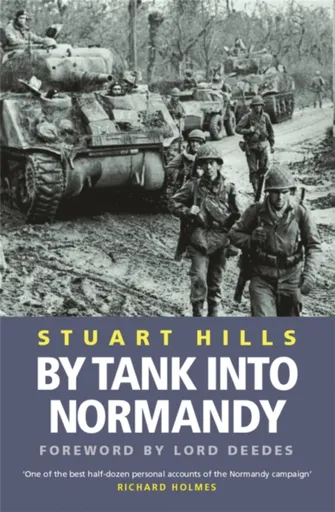
By Tank into Normandy - Stuart Hills
''One of the best half-dozen personal accounts of the Normandy campaign'' - Richard HolmesStuart Hills embarked his Sherman DD tank on to an LCT at 6.45 a.m., Sunday 4 June 1944. He was 20 years old, unblooded, fresh from a public-school background and Officer Cadet training. He was going to war. Two days later, his tank sunk, he and his crew landed from a rubber dinghy with just the clothes they stood in. After that, the struggles through the Normandy bocage in a replacement tank (of the non-swimming variety), engaging the enemy in a constant round of close encounters, led to a swift mastering of the art of tank warfare and remarkable survival in the midst of carnage and destruction. His story of that journey through hell to victory makes for compulsive reading.
Objev podobné jako By Tank into Normandy - Stuart Hills
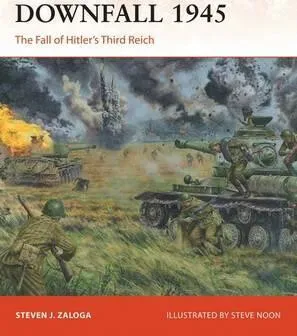
Downfall 1945 - Steven J. Zaloga
As the final month of fighting in Europe in 1945 dawned the Allies embarked upon a series of mopping up operations, destroying the last centres of German resistance as the essentially defeated Wehrmacht fought on in increasingly desperate conditions, driven on by the explicit no surrender order issued by Hitler.Yet at the same time, the Allied alliance was already on shaky ground, as German resistance was crushed the Allies began to eye each other nervously across a battletorn Europe, with the politically driven military decisions to have a huge impact on the future of the continent. This book traces the final operations of the war, from the liberation of Denmark, the Allied drive towards the Baltic straits, incursions in Yugoslavia, Hungary, Czechoslovakia and engagements in Eastern and Western Germany, whilst also analyzing how the Allied strategies in the final days of the war were a hint of the future difficulties that would drive the Cold War.
Objev podobné jako Downfall 1945 - Steven J. Zaloga
Panzers in Normandy - Eric Lefevre
Panzers in Normandy Then and Now is a detailed study of the German panzer regiments in Normandy in 1944 as seen from the German side.
Objev podobné jako Panzers in Normandy - Eric Lefevre
Ploesti 1943 - Steven J. Zaloga
Operation Tidal Wave was one of the boldest and most controversial air raids by the United States Army Air Forces (USAAF).At the time, the Romanian Ploesti oil fields produced about a third of all Axis oil, and was Germany’s single most important fuel source. In the summer of 1943, the USAAF decided to stage a major raid on Ploesti from air bases in Libya. The resulting Operation Tidal Wave raid on 1 August 1943 was one of the costliest to date, losing 53 aircraft, about a third of the starting force. Of the more than 150 bombers that took part in the raid, only 88 B-24s returned to Libya, 55 of which were damaged.On the other hand, of the 17 Medals of Honor awarded to US soldiers and airmen from Pearl Harbor in 1941 to D-Day in 1944, 5 were awarded to pilots of the Tidal Wave mission in recognition of their extraordinary performance. Although undoubtedly bold and heroic, the mission had questionable results. Initial assessments argued that the mission caused 40% of the refinery capacity at Ploesti to be lost but subsequent studies concluded that the damage was quickly repaired and that output had exceeded August levels within a ... Unknown localization key: "more"
Objev podobné jako Ploesti 1943 - Steven J. Zaloga
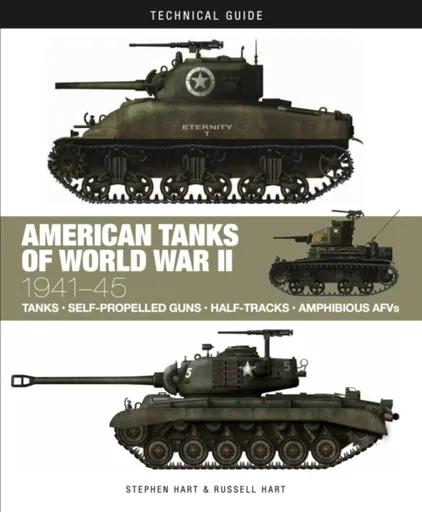
American Tanks of World War II - Dr Stephen Hart, Professor Russell A. Hart
American Tanks of World War II explores the tanks, self-propelled guns, halftracks, and armored cars deployed by American forces, from the Torch landings in Algeria to the hard fighting in Normandy and the bitter Ardennes offensive. With the United States producing almost 90,000 AFVs during World War II, American tanks made up the bulk of those deployed by the western Allies and were even supplied through the lend-lease scheme to the Soviet army on the Eastern Front. Organized chronologically by type, the entries in this book include the M3 Stuart, the first American-crewed tank to engage the enemy in tank combat in the war; the ubiquitous M4 Sherman, which proved cheap and reliable and was built in great numbers and in many variants; the M22 Locust light tank, designed to be air-dropped in support of airborne units; and the M26 Pershing, a heavy tank that arrived late in the war and was capable of beating the best tanks Germany had to offer. There are also chapters on the many motor gun carriages used by US forces, including the M8 HMC and T12 halftrack, both designed to provide close support for infantry.
Objev podobné jako American Tanks of World War II - Dr Stephen Hart, Professor Russell A. Hart
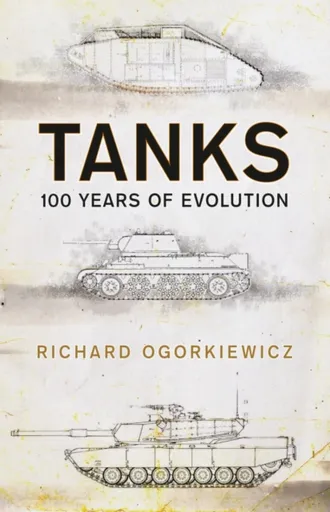
Tanks - Professor Richard Ogorkiewicz
From an internationally acclaimed expert in the field comes a detailed, analytical and comprehensive account of the worldwide evolution of tanks, from their inception a century ago to the present day.With new ideas stemming from the latest academic research, this study presents a reappraisal of the development of tanks and their evolution during World War I and how the surge in technological development during World War II and the subsequent Cold War drove developments in armour in Europe and America, transforming tanks into fast, resilient and powerful fighting machines.From the primitive, bizarre-looking Mark V to the Matilda and from the menacing King Tiger to the superlative M1 Abrams, Professor Ogorkiewicz shows how tanks gradually acquired the enhanced capabilities that enabled them to become what they are today – the core of combined-arms, mechanized warfare.
Objev podobné jako Tanks - Professor Richard Ogorkiewicz
British Battle Tanks - David Fletcher
This lavishly illustrated volume details the design, development and operational history of the British-made tanks in World War II.Plagued by unreliable vehicles and poorly thought-out doctrine, the early years of World War II were years of struggle for Britain’s tank corps. Relying on tanks built in the late 1930s, and those designed and built with limited resources in the opening years of the war, they battled valiantly against an opponent well versed in the arts of armoured warfare.This book is the second of a multi-volume history of British tanks by renowned British armour expert David Fletcher MBE. It covers the development and use of the Matilda, Crusader, and Valentine tanks that pushed back the Axis in North Africa, the much-improved Churchill that fought with distinction from North Africa to Normandy, and the excellent Cromwell tank of 1944–45.It also looks at Britain''s super-heavy tank projects, the TOG1 and TOG2, and the Tortoise heavy assault tank, designed to smash through the toughest of battlefield conditions, but never put into production.
Objev podobné jako British Battle Tanks - David Fletcher
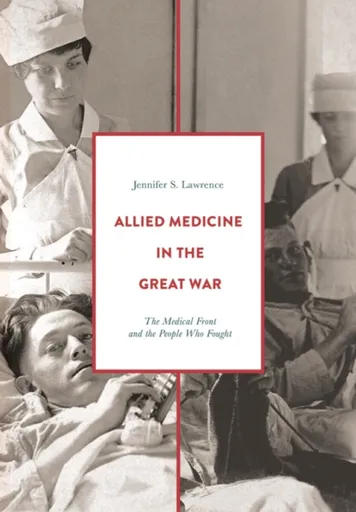
Allied Medicine in the Great War - Jennifer S. Lawrence
This book provides an overview of the history of allied medicine in the Great War. Based on both primary research and secondary literature, it offers a clear and concise account of medical treatment during the Great War, exploring the advancements of the period and the human experience of the medical war.As well as covering European medical work, the book draws on a range of American primary sources and texts in order to address the American medical experience of the First World War, an area that has been neglected by the existing literature.This is an accessible exploration of the medical war, the people involved, and its impact. It is an essential text for undergraduate and postgraduate students of history taking courses on medicine in war, the history of medicine or the Great War.
Objev podobné jako Allied Medicine in the Great War - Jennifer S. Lawrence
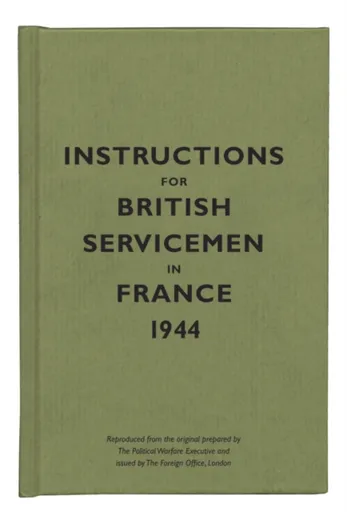
Instructions for British Servicemen in France, 1944
In 1944 the British War Office distributed a handbook to British soldiers informing them what to expect and how to behave in a newly-liberated France. This book is an irresistible insight into British attitudes towards the French and an interesting, timeless commentary on Anglo-French relations.
Objev podobné jako Instructions for British Servicemen in France, 1944

It's Not All in Your Head - Steven Taylor, Gordon J. G. Asmundson
Written by Gordon J G Asmundson, PhD and Steven Taylor, PhD. He is a Professor of Health Studies and Psychology at the University of Regina. His work focuses on the relationships between anxiety disorders and health anxiety. Steven Taylor is a Clinical Psychologist and Professor of Psychiatry at the University of British Columbia.
Objev podobné jako It's Not All in Your Head - Steven Taylor, Gordon J. G. Asmundson
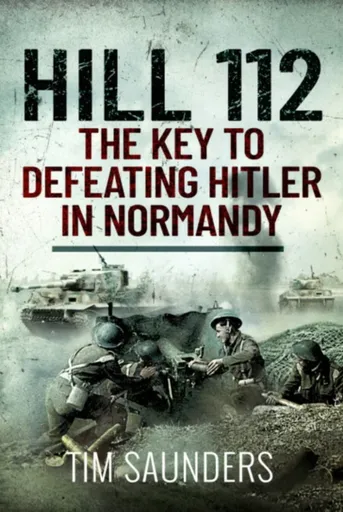
Hill 112: The Key to defeating Hitler in Normandy - Tim Saunders
‘He who holds Hill 112 holds Normandy’ seemed an unlikely maxim when the hill is viewed from a distance, but on reaching its plateau, the vistas unfold in every direction across a huge swath of Normandy. For the Germans it was their vital defensive ground, but for the British it was an essential steppingstone en route to the River Orne and access to the open country south to Falaise. The Hitlerjugend SS Panzer Division lost Hill 112 to 4th Armoured Brigade when the Scots captured the Tourmauville Bridge intact, but the essence of Hill 112’s tactical problem soon became clear. It was impossible for armour to survive on its broad plateau, while the infantry could only hold the skeletal orchards and woods at the cost of crushing casualties. With II SS Panzer Corps preparing to attack the British, the toe hold was given up and 11th Armoured Division was left holding a bridgehead across the River Odon. Ten days later, 43rd Wessex Division was ordered to resume the advance to the Orne with Hill 112 its first objective. As the west countrymen and tanks rose to advance, they met withering fire from the stronghold that Hill 112 had become. The ... Unknown localization key: "more"
Objev podobné jako Hill 112: The Key to defeating Hitler in Normandy - Tim Saunders
Allied Armies in Sicily and Italy, 1943-1945 - Simon Forty
Photographic history of the Allied armies of the Italian campaign.
Objev podobné jako Allied Armies in Sicily and Italy, 1943-1945 - Simon Forty

Epee Dream Beams plyšová zvířátka 18 cm W5 Žralok Steven
Žralok Steven je plyšové zvířátko z 5. řady Dream Beams o výšce 18 cm. Hračka je vyrobena z příjemného materiálu a obsahuje speciální vlákna, která svítí ve tmě. Je vhodná pro děti od 12 měsíců jako denní společník i pomocník při usínání.
- Příjemný a měkký materiál na dotek
- Speciální vlákna zajišťují svítivost ve tmě
- Vhodné pro děti již od 12 měsíců
- Ideální velikost 18 cm pro každodenní hraní i usínání
Objev podobné jako Epee Dream Beams plyšová zvířátka 18 cm W5 Žralok Steven

Lustr na lanku NORMAN 1xE27/60W/230V (115797)
Lustr Norman je kovové svítidlo na lanku určené pro jednu žárovku s paticí E27 a maximálním příkonem 60 W. Má certifikaci IP20, která chrání proti vniknutí malých částic, ale nezaručuje voděodolnost. Žárovka není součástí balení.
- Stylový kovový design vhodný do každého interiéru
- Snadná údržba a montáž
- Certifikace IP20 pro ochranu proti malým částicím
- Kompaktní rozměry 14 × 18 × 18 cm
Objev podobné jako Lustr na lanku NORMAN 1xE27/60W/230V (115797)
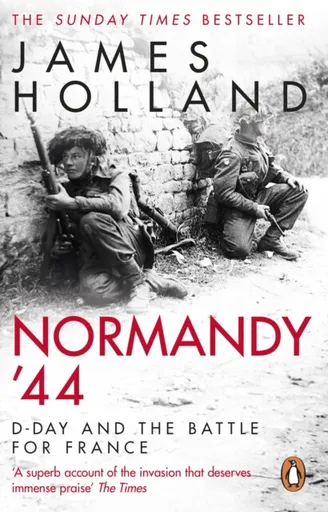
Normandy ‘44 - James Holland
''A devastating new account..Holland knows his stuff when it comes to military matters'' Daily Mail, Book of the Week''A superb account of the invasion that deserves immense praise. To convey the human drama of Normandy requires great knowledge and sensitivity. Holland has both in spades'' The Times________________Renowned World War Two historian James Holland presents an entirely new perspective on one of the most important moments in recent history, unflinchingly examining the brutality and violence that characterised the campaign.D-Day and the 76 days of bitter fighting in Normandy that followed have come to be seen as a defining episode in the Second World War. Its story has been endlessly retold, and yet it remains a narrative burdened by both myth and assumed knowledge.In this reexamined history, James Holland presents a broader overview, one that challenges much of what we think we know about D-Day and the Normandy campaign. The sheer size and scale of the Allies'' war machine ultimately dominates the strategic, operational and tactical limitations of the German forces.Drawing on unseen archives and testimonies from around the world and introducing a cast of eye-witnesses including foot soldiers, tank men, fighter pilots and more, James Holland''s epic telling profoundly recalibrates our ... Unknown localization key: "more"
Objev podobné jako Normandy ‘44 - James Holland