byzantine bembe

Byzantine Bembe
This brand-new bi-lingual Spanish/English illustrated volume celebrates the first major exhibition focusing on the art and career of the Bronx-born (b. 1956) artist of Puerto Rican descent, Manny Vega.Manny Vega’s art can be found in the form of mosaics and murals adorning street walls, subway stations, cultural centres, and business facades throughout New York’s East Harlem. Much of his work celebrates important figures—particularly women—in the history of the Puerto Rican and Latinx communities. Dubbed “Byzantine Hip-Hop” for its uncompromising technical command Vega’s aesthetic encompasses ancient Mediterranean mosaic-making and the electrifying lines of hyper-detailed Sharpie pen-and-ink drawings.Richly illustrated with over 100 artworks, 60 other comparative images, and 10 opener images, this volume covers the full range of Vega’s artistic output, from carefully crafted mosaics, including female figures and stylized album covers, to prints and works on paper, dating from the 1980s. Vega’s art has been deeply inspired by the Afro-Brazilian spiritual practices of Candomblé, which combines African, Roman Catholic, and indigenous Brazilian religions, which, along with the neighborhood of El Barrio, and music, has been an anchor of Vega’s visual lexicon. His worldview is colorful, danceable, passionately spiritual, and complex – yet accessible.
Objev podobné jako Byzantine Bembe
Late Roman to Late Byzantine/Early Islamic Period Lamps in the Holy Land - Varda Sussman
This volume illustrates lamps from the Byzantine period excavated in the Holy Land and demonstrates the extent of their development since the first enclosing/capturing of light (fire) within a portable man-made vessel. Lamps, which held important material and religious functions during daily life and the afterlife, played a large role in conveying art and cultural and political messages through the patterns chosen to decorate them. These cultural, or even more their religious affinities, were chosen to be delivered on lamps (not on other vessels) more than ever during the Byzantine period; these small portable objects were used to ‘promote’ beliefs like the ‘press’ of today. Each cultural group marked the artifacts / lamps with its symbols, proverbs from the Old and New Testaments, and this process throws light on the deep rivalry between them in this corner of the ancient world. The great variety of lamps dealt with in this volume, arranged according to their various regions of origin, emphasizes their diversity, and probably local workshop manufacture, and stands in contrast to such a small country without any physical geographic barriers to cross, only mental ones (and where one basket of lamps could satisfy the full needs of the local ... Unknown localization key: "more"
Objev podobné jako Late Roman to Late Byzantine/Early Islamic Period Lamps in the Holy Land - Varda Sussman
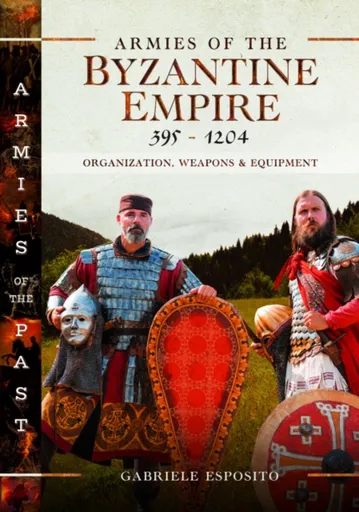
Armies of the Byzantine Empire, 395-1204 - Gabriele Esposito
The Byzantine Empire originated in AD 395 from the definitive subdivision of the Roman Empire into two distinct political entities: the Western Empire and the Eastern Empire. While the Western Empire disappeared in 476, due to Germanic invasions, the Eastern Empire endured for centuries. During Justinian’s reign (527-565) a good portion of the western territories were reconquered for a time and the Empire retained a distinctive ‘Roman’ nature at least until the reign of Heraclius (610-641). But during his reign, the Eastern Empire came under attack from the expanding Muslim Arabs, losing a much of its original Eastern territories. With Imperial power weakened and restricted largely to the Balkans and Anatolia, the ‘Roman’ nature of the Eastern Empire became progressively more Greek and transformed into what we know as ‘the Byzantine Empire’ (though they called themselves Romans to the end). Despite being surrounded by enemies, the Byzantines defended their remaining domains for a further half a millenium, their territories expanding and contracting with fluctuating fortunes. This tenacious survival was largely due to the ability of their military to adapt (as Roman armies always had) to emerging threats from a wide variety of enemies. The Byzantine Empire collapsed only in 1204, ... Unknown localization key: "more"
Objev podobné jako Armies of the Byzantine Empire, 395-1204 - Gabriele Esposito
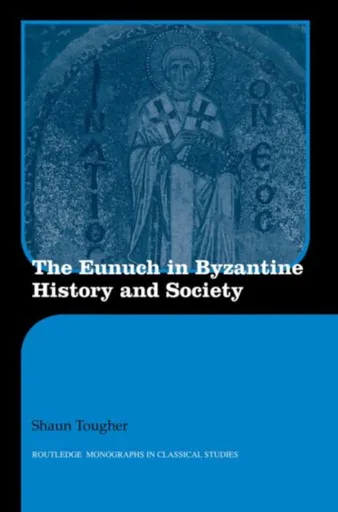
The Eunuch in Byzantine History and Society - Shaun Tougher
The existence of eunuchs was one of the defining features of the Byzantine Empire. Covering the whole span of the history of the empire, from the fourth to the fifteenth centuries AD, Shaun Tougher presents a comprehensive survey of the history and roles of eunuchs, making use of extensive comparative material, such as from China, Persia and the Ottoman Empire, as well as about castrato singers of the eighteenth century of Enlightenment Europe, and self-castrating religious devotees such as the Galli of ancient Rome, early Christians, the Skoptsy of Russia and the Hijras of India.The various roles played by eunuchs are examined. They are not just found as servile attendants; some were powerful political players – such as Chrysaphius who plotted to assassinate Attila the Hun – and others were prominent figures in Orthodoxy as bishops and monks. Furthermore, there is offered an analysis of how society thought about eunuchs, especially their gender identity - were they perceived as men, women, or a third sex? The broad survey of the political and social position of eunuchs in the Byzantine Empire is placed in the context of the history of the eunuch in general. An appendix listing key eunuchs of the ... Unknown localization key: "more"
Objev podobné jako The Eunuch in Byzantine History and Society - Shaun Tougher
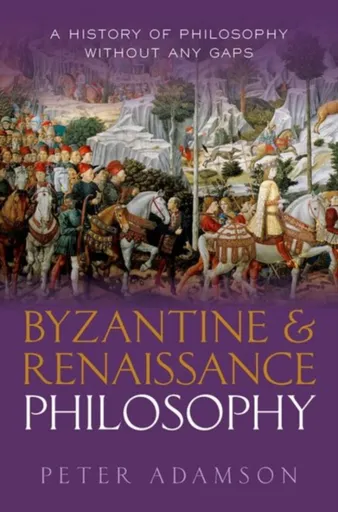
Byzantine and Renaissance Philosophy - Adamson Peter
Peter Adamson explores the rich intellectual history of the Byzantine Empire and the Italian Renaissance.Peter Adamson presents an engaging and wide-ranging introduction to the thinkers and movements of two great intellectual cultures: Byzantium and the Italian Renaissance. First he traces the development of philosophy in the Eastern Christian world, from such early figures as John of Damascus in the eighth century to the late Byzantine scholars of the fifteenth century. He introduces major figures like Michael Psellos, Anna Komnene, and Gregory Palamas, and examines the philosophical significance of such cultural phenomena as iconoclasm and conceptions of gender. We discover the little-known traditions of philosophy in Syriac, Armenian, and Georgian. These chapters also explore the scientific, political, and historical literature of Byzantium. There is a close connection to the second half of the book, since thinkers of the Greek East helped to spark the humanist movement in Italy. Adamson tells the story of the rebirth of philosophy in Italy in the fifteenth and sixteenth centuries. We encounter such famous names as Christine de Pizan, Niccolò Machiavelli, Giordano Bruno, and Galileo, but as always in this book series such major figures are read alongside contemporaries who are not so well known, including ... Unknown localization key: "more"
Objev podobné jako Byzantine and Renaissance Philosophy - Adamson Peter
Byzantine Theology - John Meyendorff
Providing a synthesis of Byzantine Christian thought, this book offers an understanding of the Byzantine view of man, his destiny of deification, the evolution of Byzantium and its ability to survive under diverse historical circumstances.
Objev podobné jako Byzantine Theology - John Meyendorff
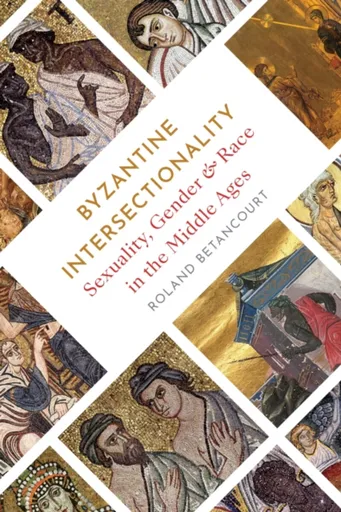
Byzantine Intersectionality - Roland Betancourt
A fascinating history of marginalized identities in the medieval worldWhile the term "intersectionality" was coined in 1989, the existence of marginalized identities extends back over millennia. Byzantine Intersectionality reveals the fascinating, little-examined conversations in medieval thought and visual culture around matters of sexual and
Objev podobné jako Byzantine Intersectionality - Roland Betancourt
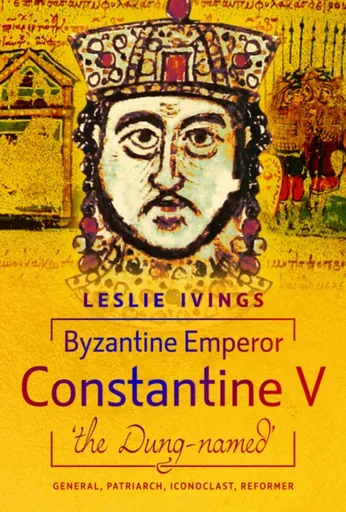
Byzantine Emperor Constantine V, 'the Dung-named' - Leslie Ivings
Constantine V, was the second East Roman (Byzantine) emperor of the Isaurian Dynasty. A masterful general, who halted the Arab Umayyad advance and went on the counter attack, he was loved by the fighting men of the East till well after his death. He was also an active ruler in other spheres, continuing the legal, social and governmental reforms of his father. His reign effectively strengthened the Empire, which was on the brink of collapse at the end of the Heraclian dynasty and he is generally regarded as one of the most capable men to rule from Constantinople. A ruthless persecutor and iconoclast, he was, however, reviled and maligned by the monastic historians of the church. His true brilliance and accomplishments would always be overshadowed by the name they bestowed upon him after his death: Copronymos (‘the dung-named’). He was compared to a summoner of demons, a magician or even a precursor to the Antichrist. Married three times to women who themselves are worthy of books, he was shrewd in his choice of wives and poltically savvy. As a shrewd ruler and administrator, and for his influence upon the theological debates of his day, he bears comparison with the much-better-known ... Unknown localization key: "more"
Objev podobné jako Byzantine Emperor Constantine V, 'the Dung-named' - Leslie Ivings
Byzantine Intersectionality - Roland Betancourt
A fascinating history of marginalized identities in the medieval worldWhile the term "intersectionality" was coined in 1989, the existence of marginalized identities extends back over millennia. Byzantine Intersectionality reveals the fascinating, little-examined conversations in medieval thought and visual culture around matters of sexual and
Objev podobné jako Byzantine Intersectionality - Roland Betancourt
Donor Portraits in Byzantine Art - Rico Franses
Argues that donor portraits in Byzantine art should instead be considered as contact portraits. Contends that the most important feature of the scenes of supplication between mortals and holy, supernatural interlocutors consists in the active role that they play within the belief systems of the supplicants.
Objev podobné jako Donor Portraits in Byzantine Art - Rico Franses
Reading the Late Byzantine Romance
The definitive work on the late Byzantine romances, the dozen or so works of imaginative fiction from the thirteenth to the fifteenth centuries which narrate the trials of aristocratic young lovers. Demonstrates the cultural value of these works and their centrality to the European and Mediterranean literary traditions.
Objev podobné jako Reading the Late Byzantine Romance
Byzantine Christianity - Prof. Dame Averil Cameron
Concise historical introduction to Byzantine Christianity and its continuing influence on the world and how we see it
Objev podobné jako Byzantine Christianity - Prof. Dame Averil Cameron